
24/7 emergency service
Emergency heating and air, day or night
When the cooling quits in August or the heat fails on a freezing night, call. Emergency service runs around the clock — nights, weekends and holidays — across Savannah, the Coastal Empire and the South Carolina Lowcountry.
Smell gas, see smoke, or hear a carbon monoxide alarm?
Leave the building now, with everyone in it, and call from outside.
- • Do not switch lights, appliances or the thermostat on or off, and do not use anything that could spark.
- • Call 911, or your gas utility's emergency line, once you are safely outside.
- • Do not go back in until the fire department or the utility says it is safe.
Those services come first because they can make the house safe. Call us after they have — we will find out why it happened and put the equipment right.
What counts as an HVAC emergency
You do not need to justify the call. If you are worried, ring and describe what is happening; we will tell you honestly whether it needs someone tonight or can wait for a daytime visit. As a guide, these are the calls that should not wait:
No cooling in serious heat
A house on the coast can climb into the nineties within hours on a July afternoon. That is dangerous for babies, older relatives, anyone with a heart or breathing condition, and pets. If someone vulnerable is in the house, it is an emergency — say so when you call.
No heat on a freezing night
Our winters are short but they do bite, and a house with no heat and an overnight freeze risks frozen pipes as well as a cold family. A heat pump stuck in defrost, a furnace that will not light, or emergency heat that has stopped working all belong here.
Water where it should not be
A blocked condensate drain or a failed pump can put water through a ceiling from an attic unit. Turn the system off at the thermostat to stop more water being produced, then call. A small, steady drip today is a stained ceiling tomorrow.
Electrical burning smells or tripping breakers
A breaker that trips again as soon as you reset it is telling you something is drawing too much current. Leave it off. Do not keep resetting it, and do not open electrical panels on the equipment — capacitors hold a charge even with the power off.
Some faults feel urgent but are often fixable in minutes. A system that stopped after the power flickered, a thermostat with dead batteries, or a filter so clogged the coil has frozen — our problems guide walks through the safe checks for each one, like an AC that will not turn on or a frozen coil.
What to tell us when you call
A good description gets the right technician, with the right parts on the van, to your door sooner. Have these ready if you can:
- Your address, and anything that affects access — a gate code, a dog, a unit in the attic or on the roof.
- What the system is doing: nothing at all, running but not cooling or heating, making a noise, leaking, or tripping the breaker.
- When it started, and whether anything happened just before — a storm, a power cut, a strange smell.
- The kind of system, if you know it: central air with a furnace, a heat pump, or a ductless mini-split.
- Who is in the house. An infant, an elderly relative or someone unwell changes how we prioritise the call.
Staying safe and comfortable while you wait
- Close blinds and curtains on the sunny side of the house, and keep doors to unused rooms shut so what cool air there is stays where people are.
- Move vulnerable people to the coolest room — usually downstairs, on the north side — and keep everyone drinking water.
- In the cold, gather in one room, close its door, and use safe, approved space heaters well away from bedding and curtains. Never use a gas oven, grill or generator indoors for heat.
- If water is leaking, switch the system off at the thermostat, put a bucket or towels under the drip, and move anything valuable out of the way.
- Check the simple things once: the thermostat mode and batteries, the filter, and the breaker. If the breaker trips again, leave it off.
- Clear the area around the indoor and outdoor units so the technician can get straight to work.
What happens when the technician arrives
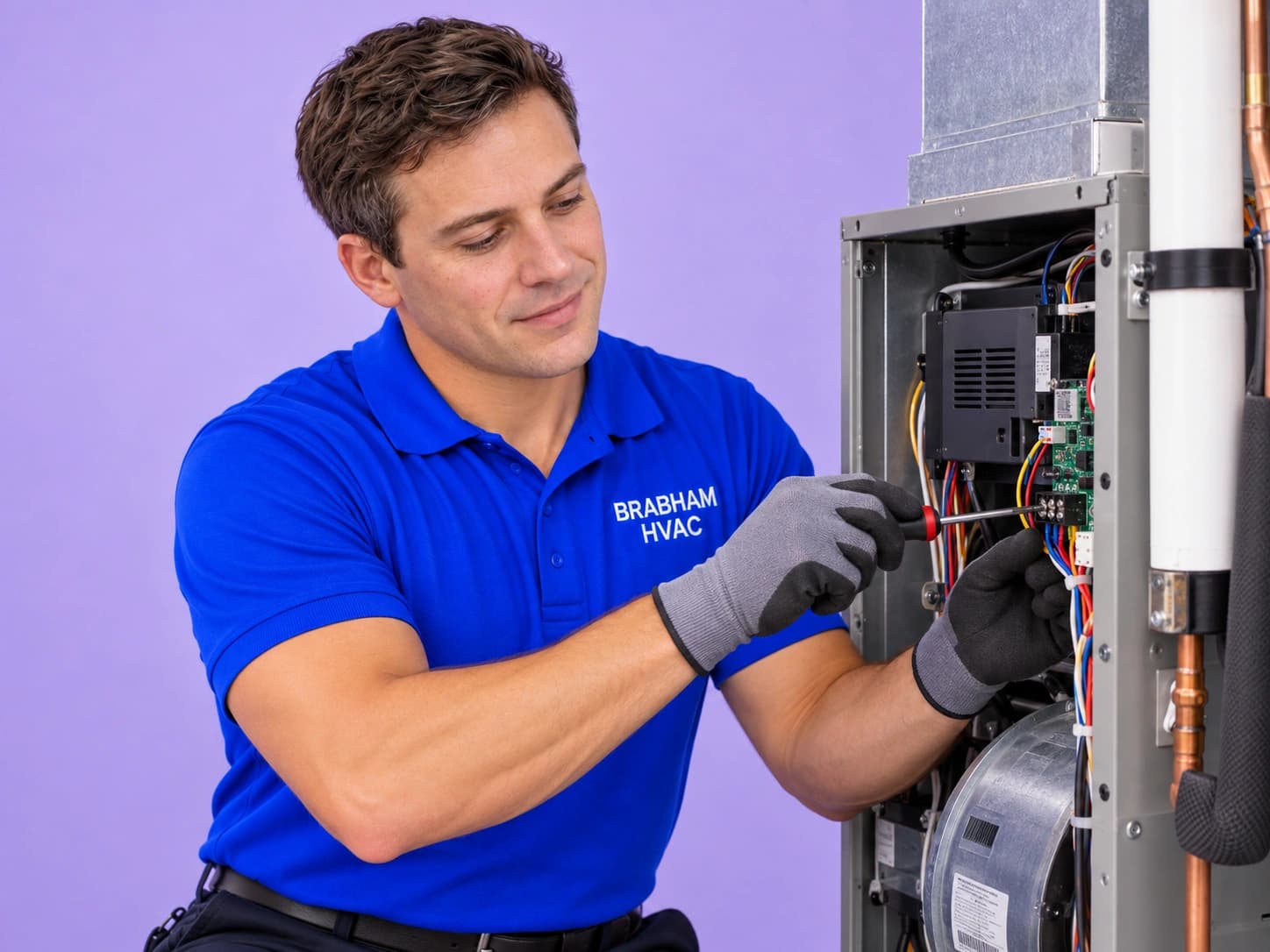
The first job is to find out what actually failed. Our technician diagnoses the system and tells you what the repair is and what it costs before any work starts — an emergency is not a reason to skip that conversation, and you are never committed to work you have not agreed to.
Many faults can be put right on the same visit. When a part has to be ordered, or when the fault means the system is at the end of its life, you will be told plainly, along with what can be done to keep the house safe in the meantime. If replacement is the sensible answer, it comes with a free written estimate, and you can take your time with it once the immediate problem is handled — our repair-or-replace guide is a good place to start.
We cannot promise an arrival time, because on the worst days of summer every contractor on the coast is busy. What we can promise is that the phone is answered, the call is taken seriously, and we will get to you as quickly as we can. Same-day service is often available.
Making the next one less likely
Most emergencies are failures that were quietly building for a while: a weak capacitor, a drain line slowly filling with algae, a coil caked with salt and pollen. A maintenance visit before the cooling season and another before the heating season is where those are found — on a calm weekday, at a fraction of the cost and none of the stress. See maintenance plans and our seasonal checklist.
No heat or no cooling right now?
Call (912) 858-3737, any hour. We cover Savannah, Pooler, Richmond Hill, Rincon, Bloomingdale, Ellabell, Statesboro, Bluffton, Hilton Head, Beaufort.
Call (912) 858-3737