

Guide
Seasonal checklist
What is worth checking yourself before each season, and — just as important — what to leave alone.
Before cooling season
Change the filter and note the date. Check that supply and return vents are open and not blocked by furniture or rugs.
Look at the outdoor unit: clear leaves and clippings, cut back anything growing into it, and check that the coil fins are not matted. With the power off at the disconnect, a gentle rinse with plain water is reasonable — never a pressure washer, which bends the fins and makes airflow worse.
Pour a cup of water into the condensate drain pan and confirm it drains. Blocked drains are the most common nuisance failure in a humid climate.
Before heating season
Change the filter again. Run the heat for a few minutes on a mild day rather than discovering a fault on the first cold night.
Expect a brief burning smell as dust burns off. Do not accept a persistent one, repeated short cycling, or a burner flame that lifts and rolls.
Test the carbon monoxide alarms and replace the batteries. If there are no CO alarms in a house with gas heat, fit them.
Through the year
Keep a note of filter changes and anything unusual — a noise, a smell, a room that stopped keeping up. That history is genuinely useful to a technician and is almost always missing.
Watch the bill as much as the thermostat. A system quietly losing efficiency shows up there first.
What to leave alone
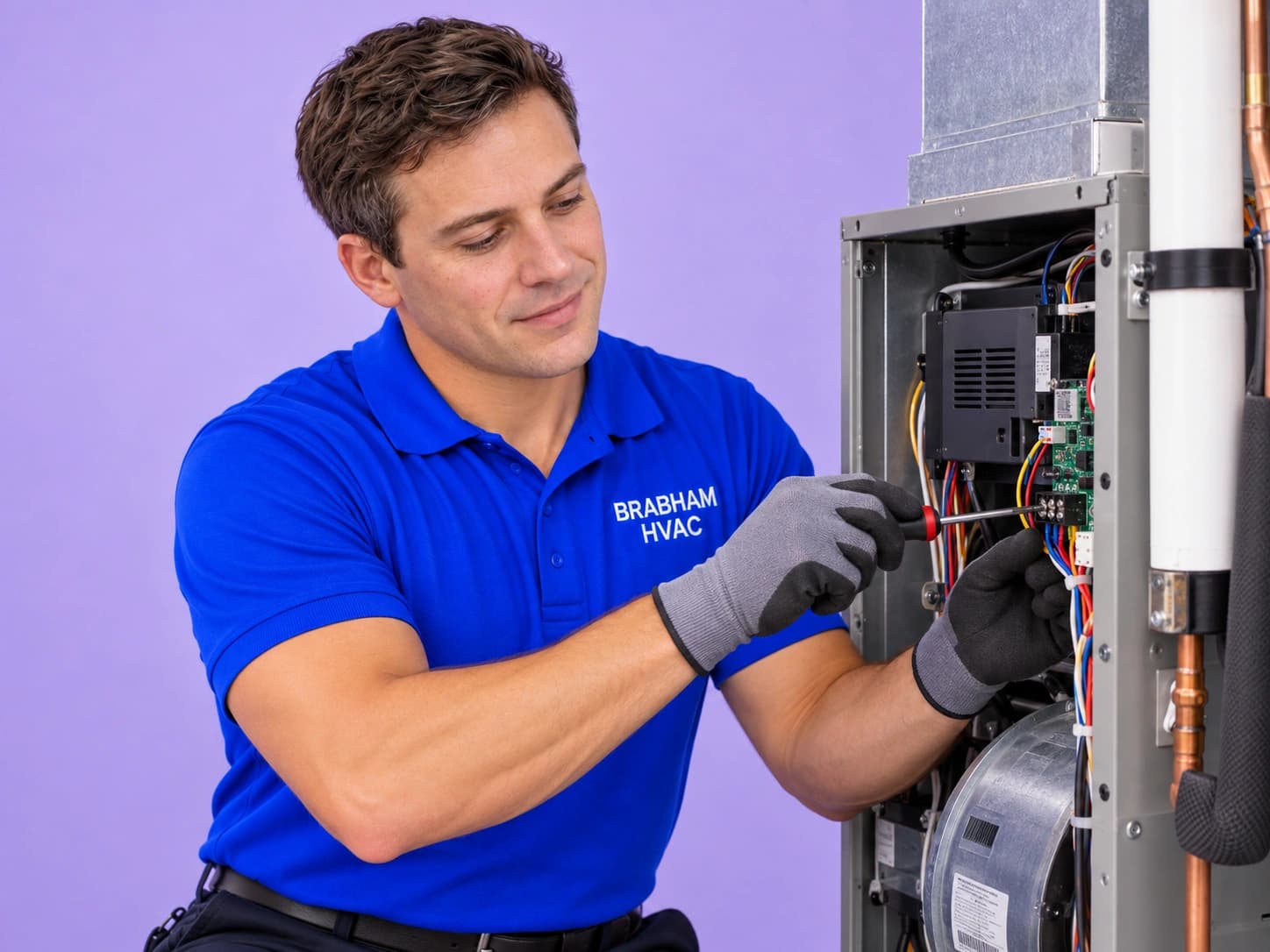
Anything involving refrigerant. Anything inside the electrical panel or the unit's control box — capacitors hold a charge after the power is off. Anything involving the gas supply or burner assembly.
Also leave sealed ductwork joints and any component you would have to remove a panel to reach. The savings are not worth the risk.
Nothing here replaces a proper measurement. The free site visit is the point at which we confirm every figure — call (912) 858-3737 or book below.